Diagnostic guides
How to check CAN bus termination resistance (60 vs 120 ohms)
By Sebastian Rivera
The short answer
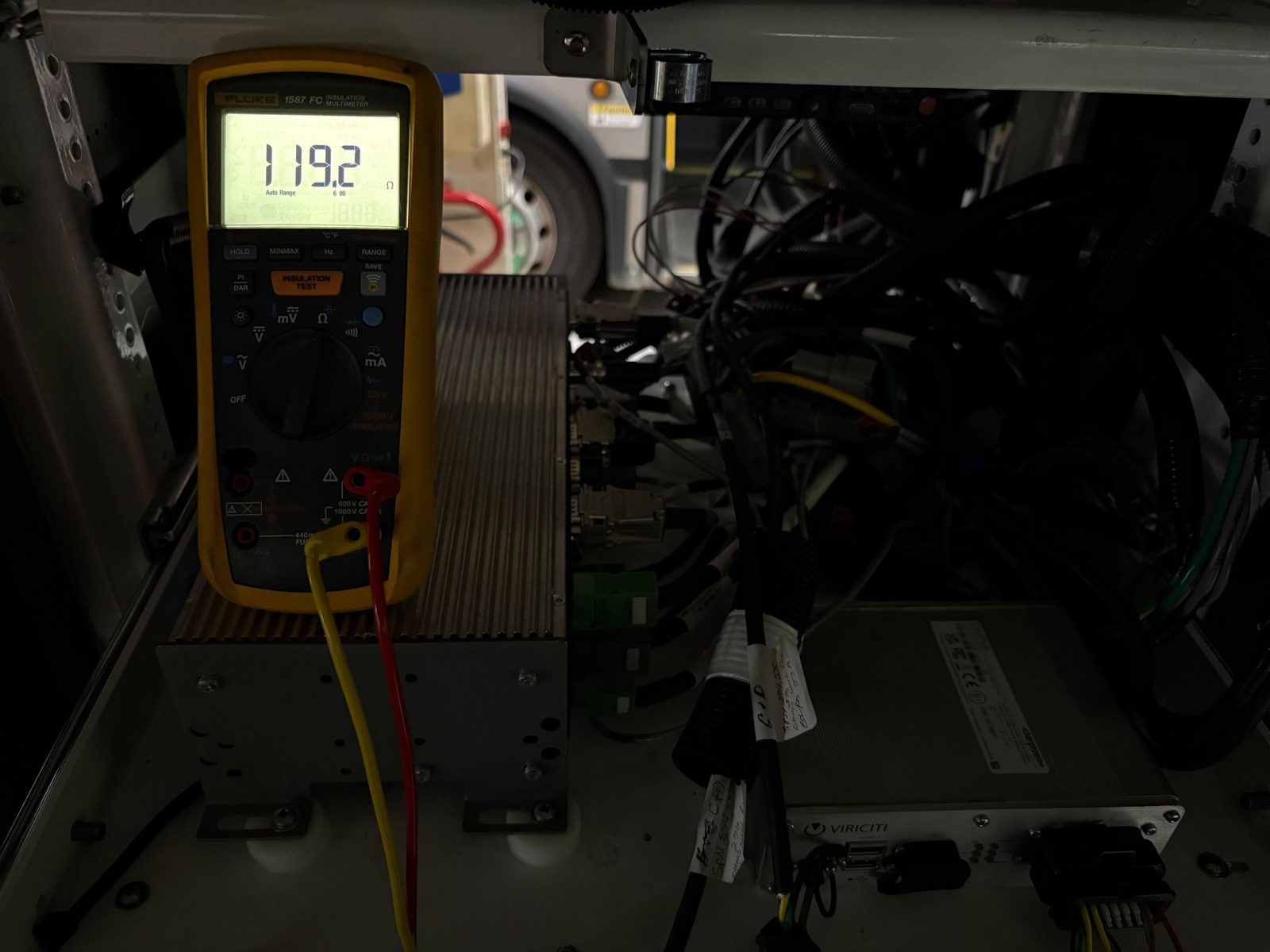
With the power off, measure the resistance between CAN high and CAN low. A healthy high speed CAN or J1939 network has a 120 ohm terminating resistor at each end, and the 2 in parallel read about 60 ohms. About 120 ohms means the meter is only seeing 1 terminator. Much lower than 60 points to an extra terminator or a short between the lines.
From a real job
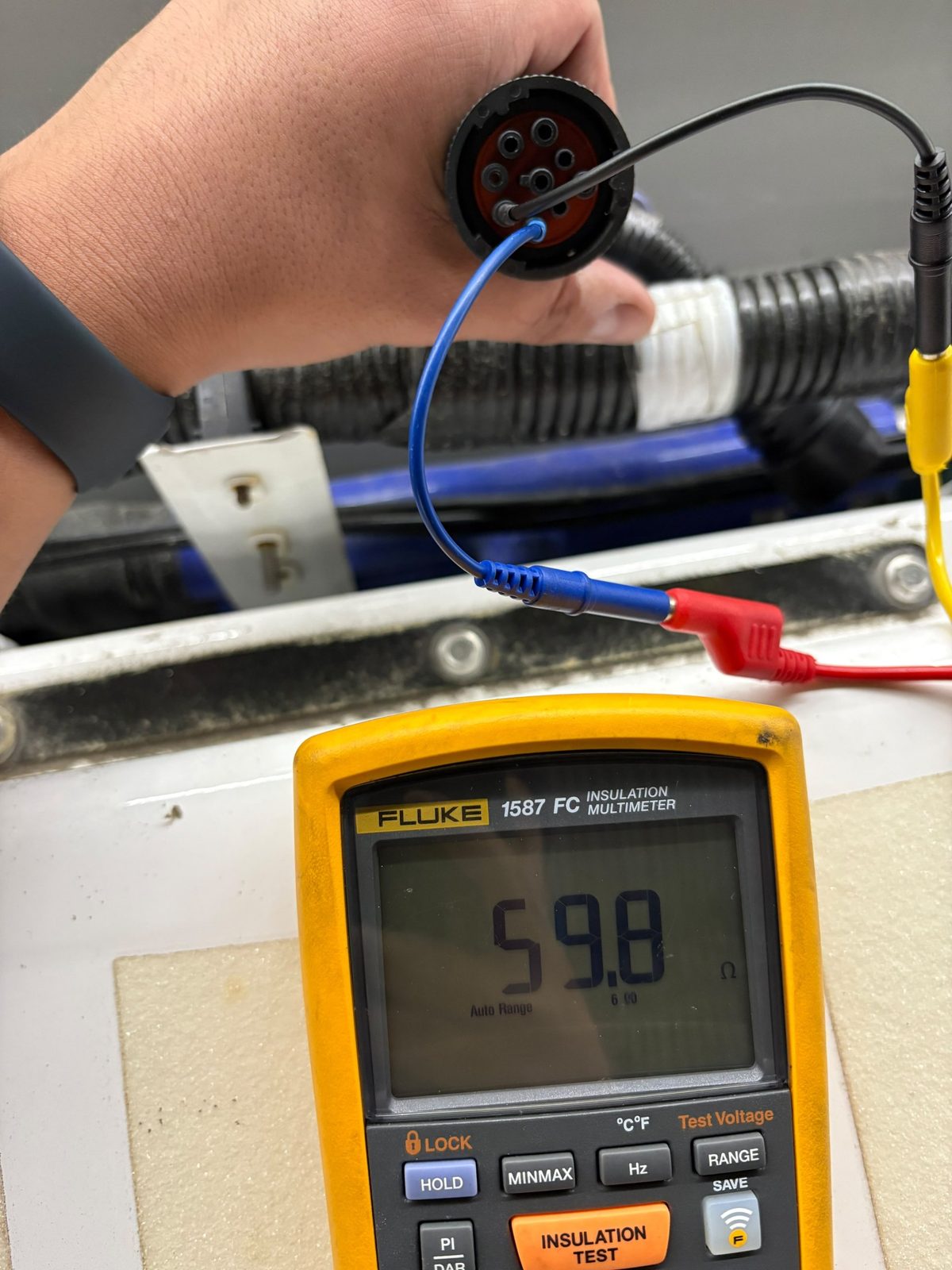
In the video, Sebastian is checking the network at connector X11 on the ESS2 circuit. With the battery manager disconnected, he reads 60 ohms, which confirms the wiring and terminators on that circuit are intact.
How to do it
- Power the network down. Turn the vehicle off and disconnect the low voltage batteries, so no module is awake on the bus. A resistance reading on a live network is not reliable.
- Pick a point on the network. On heavy vehicles, the 9 pin diagnostic connector is the quickest place to start. On J1939, pin C is CAN high and pin D is CAN low. Anywhere else, back probe the 2 network wires at a module connector.
- Measure between CAN high and CAN low. Set the multimeter to ohms and put 1 lead on each line.
- Compare the reading. Use the table below to see what the number is telling you.
- Split the network if it is wrong. Disconnect modules or sections 1 at a time and measure again, until the reading changes. The last thing you disconnected tells you where to look.
What the reading means
| About 60 ohms | Both terminators are in circuit and the wiring between them is intact. |
|---|---|
| About 120 ohms | Only 1 terminator is in circuit. Look for an open wire, an unplugged connector or a missing terminator. |
| Well under 60 ohms | There are more than 2 terminators on the network, often from a module or tool with its own termination. |
| Close to 0 ohms | CAN high and CAN low are shorted together. |
| OL (open) | Both terminators are missing, or the line is open at the point you are measuring. |
A good 60 ohm reading proves the wiring and the terminators, not the modules. A module can still distort traffic on a network that measures perfectly, and that is when the oscilloscope comes out. See a case where the network measured fine and a module was the problem.